
Kosár
0
0,00 Ft

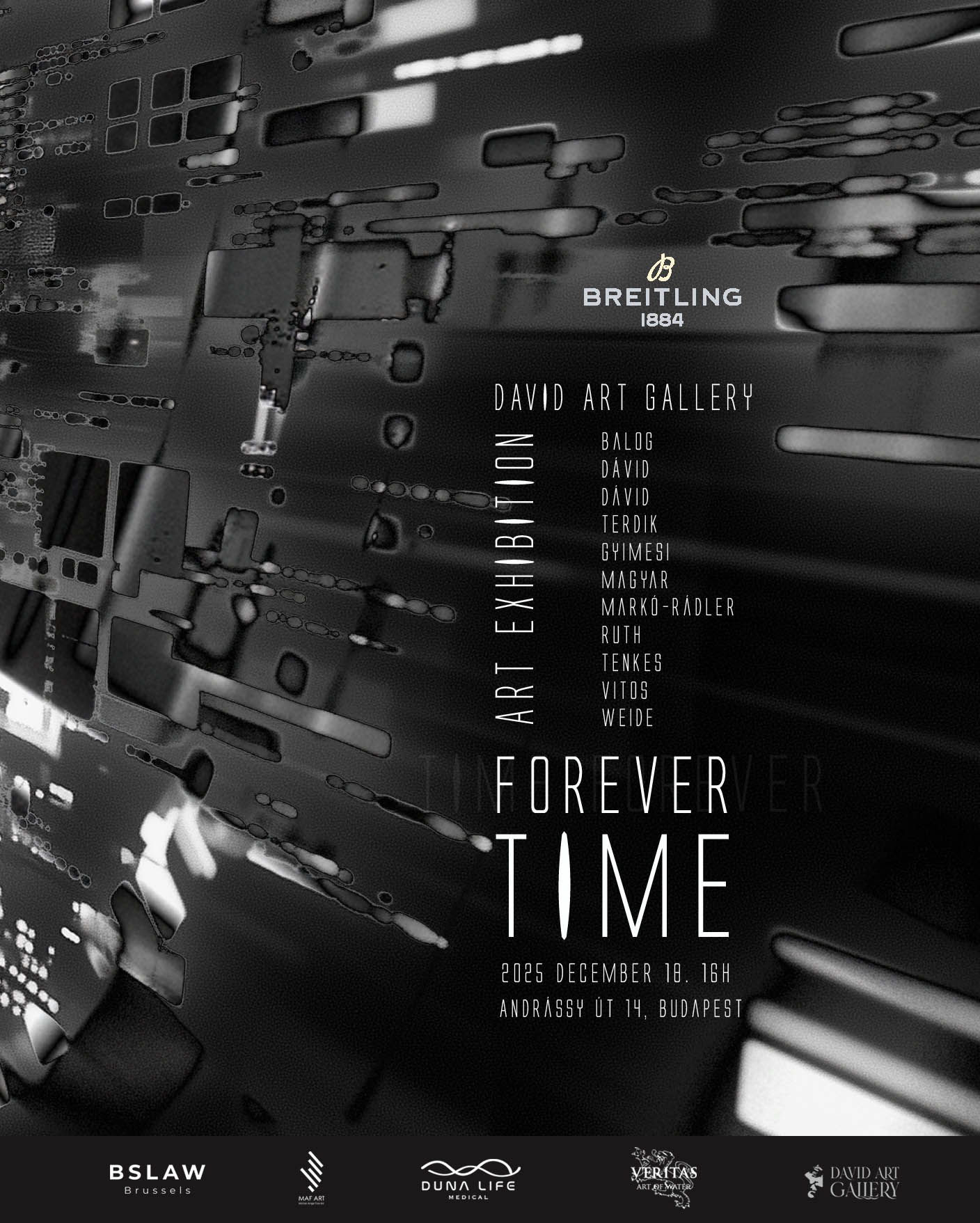
GROUP ART EXHIBITION
Opening: 18 December 16.00h
Duration: 18 December - 22 December 2025
Organizer: David Art Gallery 1055 Budapest, Falk Miksa 8
Location: 1061 BREITLING BUDAPEST, Andrássy 14.
EXHIBITING ARTISTS
Bela Balog, David Norbert, Ervin David, Szilvia Terdik, Zsuzsa Gyimesi, Bela Magyar, Ruth Schmidt, Elvira Marko-Radler, Brigitta Tenkes, Irén Vitos, Ancsa Weide
A kortárs művészetben az idő központi jelentőségű tényező: egyszerre tematika, eszköz és értelmezési keret. A művészek gyakran vizsgálják az emlékezet és felejtés folyamatait, a gyorsan változó társadalmi és technológiai környezet hatásait, valamint azt, hogyan alakítja át az idő a jelentésképzést. Sok alkotás folyamatalapú vagy időfüggő, amelyek a múlékonyságra vagy a változásra építenek. Az idő így nemcsak hátteret ad, hanem aktív szereplővé válik, amely alakítja a mű befogadását és a néző élményét is.
Time is a central factor in contemporary art: it is simultaneously a theme, a tool, and a framework for interpretation. Artists often examine the processes of memory and forgetting, the effects of a rapidly changing social and technological environment, and how time shapes the formation of meaning. Many works are process-based or time-dependent, building on transience or change. Time thus not only provides a backdrop, but also becomes an active participant, shaping the reception of the work and the viewer's experience.
A kortárs művészet és az idő kapcsolata tágabb értelemben nem csupán tematikai vagy formai kérdés, hanem egy összetett kulturális, filozófiai és technológiai összefüggésrendszer része.
A 20–21. század fordulójától egyre hangsúlyosabbá vált, hogy a művészet nem egy statikus, lezárt tárgy, hanem olyan folyamat, amelyben az idő aktív tényezőként működik. Az idő jelenléte megmutatkozhat a mű létrejöttének körülményeiben, az alkotás befogadásának módjában, a művészeti intézményrendszer működésében, sőt a társadalmi időérzékelés átalakulásában is.
A gyorsuló technológiai fejlődés újfajta időtapasztalatot hozott létre: a digitális kultúra azonnalisága, a folyamatos információáramlás és a rövidülő figyelmi ciklusok új kihívásokat jelentenek a művészeknek. Egyes alkotók erre reagálva kísérleteznek lassú, meditatív művekkel, amelyek ellensúlyozzák a felgyorsult világot; mások épp a gyorsaságot, a váltoékonyságot vagy az instabilitást építik be az alkotásaikba.
A művészetben az idő filozófiai dimenziója is hangsúlyos: kérdések merülnek fel az identitás megőrzéséről, a társadalmi emlékezetről, a történeti narratívák átírásáról és az elmúláshoz való viszonyunkról. Sok mű reflektál arra is, hogy a jelent mindig a múlt értelmezései és a jövőre vonatkozó elvárások határozzák meg.
Végső soron az idő a kortárs művészetben egyszerre metafora, tapasztalat, struktúra és médium. Nemcsak arról szól, hogyan múlik vagy változik valami, hanem arról is, hogyan alakítja az emberi figyelmet, a közös emlékezetet és a kulturális jelentéseket. Az idő így a művek egyik legfontosabb "láthatatlan" alkotóeleme, amely végigkíséri az alkotástól a befogadásig tartó teljes folyamatot.
In a broader sense, the relationship between contemporary art and time is not merely a question of theme or form, but part of a complex system of cultural, philosophical, and technological interrelationships.
Since the turn of the 20th and 21st centuries, it has become increasingly clear that art is not a static, closed object, but a process in which time plays an active role. The presence of time can be seen in the circumstances of the work's creation, in the way it is received, in the functioning of the art institution system, and even in the transformation of society's perception of time.
Accelerating technological development has created a new kind of experience of time: the immediacy of digital culture, the constant flow of information, and shortening attention spans pose new challenges for artists. In response, some artists are experimenting with slow, meditative works that counterbalance the accelerated world; others are incorporating speed, changeability, or instability into their creations.
The philosophical dimension of time is also prominent in art: questions arise about the preservation of identity, social memory, the rewriting of historical narratives, and our relationship to passing time. Many works also reflect on the fact that the present is always determined by interpretations of the past and expectations for the future.
Ultimately, time in contemporary art is simultaneously a metaphor, an experience, a structure, and a medium. It is not only about how something passes or changes, but also about how it shapes human attention, collective memory, and cultural meanings. Time is thus one of the most important "invisible" components of artworks, accompanying the entire process from creation to reception.
A kiállítás a Dávid Galéria és a Breitling Budapest együttműködésében jött létre.

The exhibition was created in collaboration between
the David Gallery and Breitling Budapest.
Partnerünk


